
The gravel and landscaping calculators need JavaScript to run in your browser. Enable JavaScript, or use a browser that supports it, to create an estimate.
Topsoil Calculator: Find Out How Much Topsoil You Need
Planning to add fresh topsoil to your lawn, garden, or landscaping project? The first step is knowing how much soil to order. Buying too little can delay your work. Buying too much can waste money and leave you with extra soil to store or remove.
Our topsoil calculator helps you estimate the amount of topsoil needed for your project. Enter the length and width of your area, choose the topsoil depth, and calculate the volume. You can view the result in cubic yards or cubic feet.
Whether you are filling a garden bed, preparing a new lawn, leveling part of your yard, or improving an existing landscape, a topsoil calculator makes the planning process easier. You do not need to work through complicated measurements by hand. Just enter your project dimensions and use the result to plan your soil order.
This guide explains how to use the topsoil calculator, measure your project, convert soil volume, and avoid common mistakes. It also includes practical examples for yards, lawns, and gardens across the United States.

Table of Contents
What Is a Topsoil Calculator?
A topsoil calculator is a simple tool that estimates how much topsoil you need to cover a specific area at a selected depth. It uses three basic measurements:
- Length: How long the area is.
- Width: How wide the area is.
- Depth: How thick the topsoil layer should be.
The calculator uses these measurements to find the total volume of soil. You can then use that volume to decide how much topsoil to order from a local supplier.
For example, imagine you want to spread topsoil over a lawn that is 20 feet long and 15 feet wide. You plan to add a layer that is 3 inches deep. The topsoil calculator uses the measurements to estimate the required volume in cubic feet and cubic yards.
A topsoil calculator is useful for both small and large projects. You can use it for a small flower bed, a vegetable garden, a front lawn, or a larger landscaping area.
It can also help when you need to compare measurements. Some suppliers sell topsoil by the cubic yard, while others list it by the cubic foot. Knowing your required volume makes it easier to understand the quantity being offered.
How to Use the Topsoil Calculator
Using the topsoil calculator is straightforward. You only need to measure the area and choose the depth you want to fill.
Follow these steps:
Step 1: Measure the Length
Measure the longest side of the area you want to cover. Use a tape measure and record the length in feet.
For example, if your garden bed is 12 feet long, enter 12 as the length.
Step 2: Measure the Width
Measure the shorter side of the area. Make sure the measurement covers the full width of the space.
If your garden bed is 6 feet wide, enter 6 as the width.
Step 3: Choose the Topsoil Depth
Decide how deep you want the new soil layer to be. Topsoil depth depends on the project. A light topdressing needs less soil than a new garden bed.
You can enter the depth in inches. Common choices include 1, 2, 3, 4, 6, and 12 inches.
Step 4: Calculate the Volume
Enter the measurements into the topsoil calculator and select the calculate option. The result shows the estimated amount of soil required.
The calculator may show the volume in cubic feet and cubic yards. These are common units used by US landscaping and soil suppliers.
Step 5: Plan Your Soil Order
Use the result to contact a local supplier or compare available products. Check whether the supplier sells loose topsoil by the cubic yard or packaged soil by the bag.
Before placing an order, consider the condition of your site. Uneven ground, low spots, and soil settling can affect the amount you need.
How Does a Topsoil Calculator Work?
A topsoil calculator works by finding the volume of a space. Volume is the amount of three-dimensional space that soil will fill.
For a rectangular area, the basic formula is:
Volume = Length × Width × Depth
However, all three measurements must use the same unit. If your length and width are in feet but your depth is in inches, convert the depth into feet before multiplying.
There are 12 inches in one foot. Therefore:
Depth in feet = Depth in inches ÷ 12
Once you have the depth in feet, multiply it by the length and width.
Formula for Cubic Feet
Use this formula when the area is measured in feet and the depth is measured in inches:
Cubic Feet = Length (ft) × Width (ft) × Depth (in) ÷ 12
Formula for Cubic Yards
Soil suppliers commonly sell bulk topsoil by the cubic yard. One cubic yard contains 27 cubic feet.
To convert cubic feet into cubic yards, divide the cubic feet by 27.
Cubic Yards = Cubic Feet ÷ 27
You can also use this combined formula:
Cubic Yards = Length (ft) × Width (ft) × Depth (in) ÷ 324
These formulas allow you to calculate topsoil for many rectangular spaces. A topsoil calculator performs the same basic calculation automatically.
Example: How Much Topsoil Do You Need for a 20 × 15 Foot Area?
Suppose you want to cover a rectangular lawn section that measures:
- Length: 20 feet
- Width: 15 feet
- Topsoil depth: 3 inches
First, multiply the length by the width:
20 × 15 = 300 square feet
Next, multiply the area by the depth in inches and divide by 12:
300 × 3 ÷ 12 = 75 cubic feet
Now convert cubic feet into cubic yards:
75 ÷ 27 = 2.78 cubic yards
You need approximately 2.78 cubic yards of topsoil for this area at a depth of 3 inches.
In practice, you may choose to order a little more if the ground is uneven or has low spots. The amount of extra soil depends on the condition of the area and how accurately you can spread it.
This is one reason a topsoil calculator is helpful. It gives you a clear starting estimate before you contact a supplier.
Topsoil Calculator in Square Feet
Most homeowners measure lawns, gardens, and landscaping spaces in square feet. That makes square footage an important part of a soil estimate.
A topsoil calculator square feet calculation starts with the total area you want to cover. You then multiply that area by the planned depth to find the volume.
For a rectangular space:
Area = Length × Width
For example, a lawn that is 40 feet long and 25 feet wide has an area of:
40 × 25 = 1,000 square feet
If you want to add 2 inches of topsoil, the volume is:
1,000 × 2 ÷ 12 = 166.67 cubic feet
Then:
166.67 ÷ 27 = 6.17 cubic yards
You need about 6.17 cubic yards to cover 1,000 square feet at a depth of 2 inches.
The same method works for other areas. You can measure a small garden, a large backyard, or a section of land around your home.
A topsoil calculator can help you estimate the amount for different square footage measurements. You only need to change the area or depth to get a new result.
How to Calculate Topsoil for Different Area Sizes
The table below shows approximate topsoil quantities for common area sizes. These examples assume a level rectangular area and do not include extra material for uneven ground.
| Area | 1 inch deep | 2 inches deep | 4 inches deep |
|---|---|---|---|
| 100 sq ft | 0.31 yd³ | 0.62 yd³ | 1.23 yd³ |
| 200 sq ft | 0.62 yd³ | 1.23 yd³ | 2.47 yd³ |
| 500 sq ft | 1.54 yd³ | 3.09 yd³ | 6.17 yd³ |
| 1,000 sq ft | 3.09 yd³ | 6.17 yd³ | 12.35 yd³ |
| 1,500 sq ft | 4.63 yd³ | 9.26 yd³ | 18.52 yd³ |
| 2,000 sq ft | 6.17 yd³ | 12.35 yd³ | 24.69 yd³ |
| 5,000 sq ft | 15.43 yd³ | 30.86 yd³ | 61.73 yd³ |
These figures are rounded. Your actual order may differ because of the shape of the area, the condition of the ground, and the final depth you want.
For a more accurate result, enter your own measurements into the topsoil calculator rather than relying only on a general table.
Topsoil Calculator by Length and Width
Measuring length and width is usually the easiest way to calculate soil for a rectangular area. This method works well for most lawns, garden beds, and open landscaping spaces.
Measure both sides in feet. Then choose a depth in inches.
For example, a flower bed measures 8 feet long and 4 feet wide. You want to add 6 inches of soil.
The area is:
8 × 4 = 32 square feet
The volume is:
32 × 6 ÷ 12 = 16 cubic feet
Convert the result into cubic yards:
16 ÷ 27 = 0.59 cubic yards
You need about 16 cubic feet, or 0.59 cubic yards, of topsoil.
A topsoil measurement calculator can make this process faster. It handles the conversion and multiplication for you.
If your project has more than one rectangular section, calculate each section separately and add the results. This is often easier than trying to measure the entire area as one shape.
Topsoil Calculator for Irregular Areas
Not every lawn or garden has a perfect rectangular shape. Some areas have curves, corners, narrow sections, or unusual boundaries.
You can still use a topsoil calculator for these projects. The key is to divide the area into smaller shapes that are easier to measure.
For example, imagine your backyard has an L-shaped section. Divide it into two rectangles.
Measure the length and width of the first rectangle. Calculate its area. Then repeat the process for the second rectangle.
Add the two areas together:
Total Area = Area 1 + Area 2
After finding the total area, multiply it by the topsoil depth to estimate the volume.
For a curved or circular garden, you can use a circle formula:
Area = 3.14 × Radius × Radius
The radius is the distance from the center of the circle to its outer edge.
For example, if a circular garden has a radius of 5 feet:
3.14 × 5 × 5 = 78.5 square feet
If you want to add 3 inches of topsoil:
78.5 × 3 ÷ 12 = 19.63 cubic feet
19.63 ÷ 27 = 0.73 cubic yards
You need approximately 0.73 cubic yards of soil.
For very uneven or complicated spaces, divide the area into several smaller sections. This method gives you a more useful estimate than guessing the total dimensions.
How Deep Should Topsoil Be?
The correct topsoil depth depends on what you are doing. A thin layer may be enough for improving an existing lawn. A new garden bed usually needs more soil.
There is no single depth that works for every project. Consider the existing soil, the plants you want to grow, and the condition of the site.
Here are some general planning examples:
| Project | Example topsoil depth |
|---|---|
| Light lawn topdressing | ¼ to ½ inch |
| General lawn improvement | 1 to 2 inches |
| Preparing some planting areas | 2 to 4 inches |
| New garden bed | 4 to 6 inches or more |
| Deeper raised bed | Depends on the full bed design |
These are starting points, not universal gardening rules. Some plants need a specific soil depth or a different growing mix. Check the needs of your grass, flowers, vegetables, or other plants before ordering soil.
A topsoil calculator lets you test different depths. For example, you can calculate the amount needed for 2 inches and then compare it with the amount needed for 4 inches.
Do not automatically add a deep layer over an existing lawn. A layer that is too thick can cover grass blades and affect the lawn. For topdressing, use a depth that suits the grass and the condition of the surface.
Topsoil Calculator in Cubic Feet and Cubic Yards
Topsoil volume is commonly measured in cubic feet and cubic yards in the United States.
A cubic foot is a volume equal to a space that measures 1 foot long, 1 foot wide, and 1 foot high.
A cubic yard is larger. It is a space that measures 3 feet long, 3 feet wide, and 3 feet high.
One cubic yard equals 27 cubic feet.
This conversion is important because different suppliers may use different units. A garden center may sell smaller quantities in cubic feet. A bulk soil supplier may quote prices and deliveries in cubic yards.
A topsoil volume calculator helps you find the total volume before converting it into the unit your supplier uses.
How to Convert Cubic Feet to Cubic Yards
Use this simple formula:
Cubic Yards = Cubic Feet ÷ 27
For example, if your project needs 135 cubic feet:
135 ÷ 27 = 5 cubic yards
You need 5 cubic yards of topsoil.
How to Convert Cubic Yards to Cubic Feet
Multiply the number of cubic yards by 27.
Cubic Feet = Cubic Yards × 27
For example:
4 × 27 = 108 cubic feet
Four cubic yards of topsoil equal 108 cubic feet.
A topsoil calculator in yards is useful when you plan to order bulk soil. A topsoil calculator cubic feet result is also helpful when you are working with smaller areas or comparing packaged soil quantities.
If you are unsure which unit your supplier uses, ask before placing your order.
How to Calculate Topsoil for a Garden
Gardens often have different dimensions and soil requirements. A small flower bed may need less soil than a large vegetable garden.
Start by measuring the length and width of the garden. If the garden is rectangular, multiply these measurements to find the area.
Then choose a depth based on the plants and the existing soil.
For example, imagine a vegetable garden that is 10 feet long and 10 feet wide. You want to add 4 inches of topsoil.
Area:
10 × 10 = 100 square feet
Volume:
100 × 4 ÷ 12 = 33.33 cubic feet
Cubic yards:
33.33 ÷ 27 = 1.23 cubic yards
You need approximately 1.23 cubic yards of topsoil.
A garden topsoil calculator can help you estimate soil volume for a planting area. However, remember that topsoil and garden soil are not always the same product. Garden soil may contain compost or other materials. Choose a product that suits the plants you want to grow.
For raised beds, measure the inside length and width. Use the depth of the soil space, not the outside height of the frame. If the bed already contains soil, measure only the additional depth you plan to fill.
How to Calculate Topsoil for a Lawn
A lawn may need topsoil when you are preparing new grass, filling shallow low spots, or improving the surface before planting.
First, measure the section of lawn you want to cover. If you are treating the entire yard, measure the full area. If you are treating only a few low spots, calculate each section separately.
Choose a suitable depth for your project. A light topdressing is very different from preparing bare ground for a new lawn.
For example, suppose you have a lawn section that measures 30 feet by 20 feet. You want to add 2 inches of topsoil.
Area:
30 × 20 = 600 square feet
Volume:
600 × 2 ÷ 12 = 100 cubic feet
Cubic yards:
100 ÷ 27 = 3.70 cubic yards
You need about 3.70 cubic yards of topsoil.
A landscaping soil calculator can also help with soil estimates for other outdoor areas, such as planting strips and borders.
Before spreading soil over an existing lawn, make sure the grass type and condition are suitable for topdressing. Avoid burying healthy grass under a thick layer. If you are preparing bare ground for seeding or sod, follow the recommended soil preparation instructions for that grass.
Topsoil Quantity Calculator: How Much Should You Order?
Finding the volume is the main step. The next step is deciding how much topsoil to order.
A topsoil quantity calculator gives you an estimate based on the dimensions and depth you enter. However, the final quantity may need a small adjustment.
Your site may have:
- Low spots that need more soil.
- Uneven ground.
- Existing soil that needs to be removed.
- Areas that are difficult to measure.
- Soil that settles after spreading.
For a fairly level area with accurate measurements, the calculated volume may be close to the amount you need.
For an uneven area, you may need extra material. Some people use a small allowance, such as 5% to 10%, as a planning estimate. This is not a fixed rule. The right amount depends on the site.
For example, if your calculated requirement is 5 cubic yards, a 10% allowance would be:
5 × 0.10 = 0.5 cubic yards
5 + 0.5 = 5.5 cubic yards
You would plan for approximately 5.5 cubic yards.
Do not add extra soil without considering the finished surface height. Too much topsoil can create drainage problems or cover areas that should remain clear.
Topsoil Estimator for Common Projects
A topsoil estimator is useful when you want a quick idea of the soil needed for a project. The following examples show how the same formula works for different spaces.
Example 1: A 10 × 10 Foot Garden
A garden measures 10 feet by 10 feet. You want a 4-inch layer.
- Area: 100 square feet
- Depth: 4 inches
- Volume: 33.33 cubic feet
- Cubic yards: 1.23
Estimated requirement: 1.23 cubic yards.
Example 2: A 20 × 20 Foot Lawn
A lawn section measures 20 feet by 20 feet. You want a 2-inch layer.
- Area: 400 square feet
- Depth: 2 inches
- Volume: 66.67 cubic feet
- Cubic yards: 2.47
Estimated requirement: 2.47 cubic yards.
Example 3: A 4 × 8 Foot Raised Bed
A raised bed measures 4 feet by 8 feet. You want to fill 12 inches of depth.
- Area: 32 square feet
- Depth: 12 inches
- Volume: 32 cubic feet
- Cubic yards: 1.19
Estimated requirement: 1.19 cubic yards.
This example assumes the entire 12-inch space needs to be filled with the soil being calculated. If the bed already contains soil or has a different base material, calculate only the space you need to fill.
Example 4: A 30 × 50 Foot Yard
A yard section measures 30 feet by 50 feet. You want to add 3 inches of topsoil.
- Area: 1,500 square feet
- Depth: 3 inches
- Volume: 375 cubic feet
- Cubic yards: 13.89
Estimated requirement: 13.89 cubic yards.
These examples show why a topsoil estimate calculator is useful. A small change in area or depth can make a large difference in the total amount of soil.
What Is the Difference Between Topsoil, Garden Soil, and Dirt?
People sometimes use the words topsoil, garden soil, and dirt as if they mean the same thing. However, they can refer to different materials.
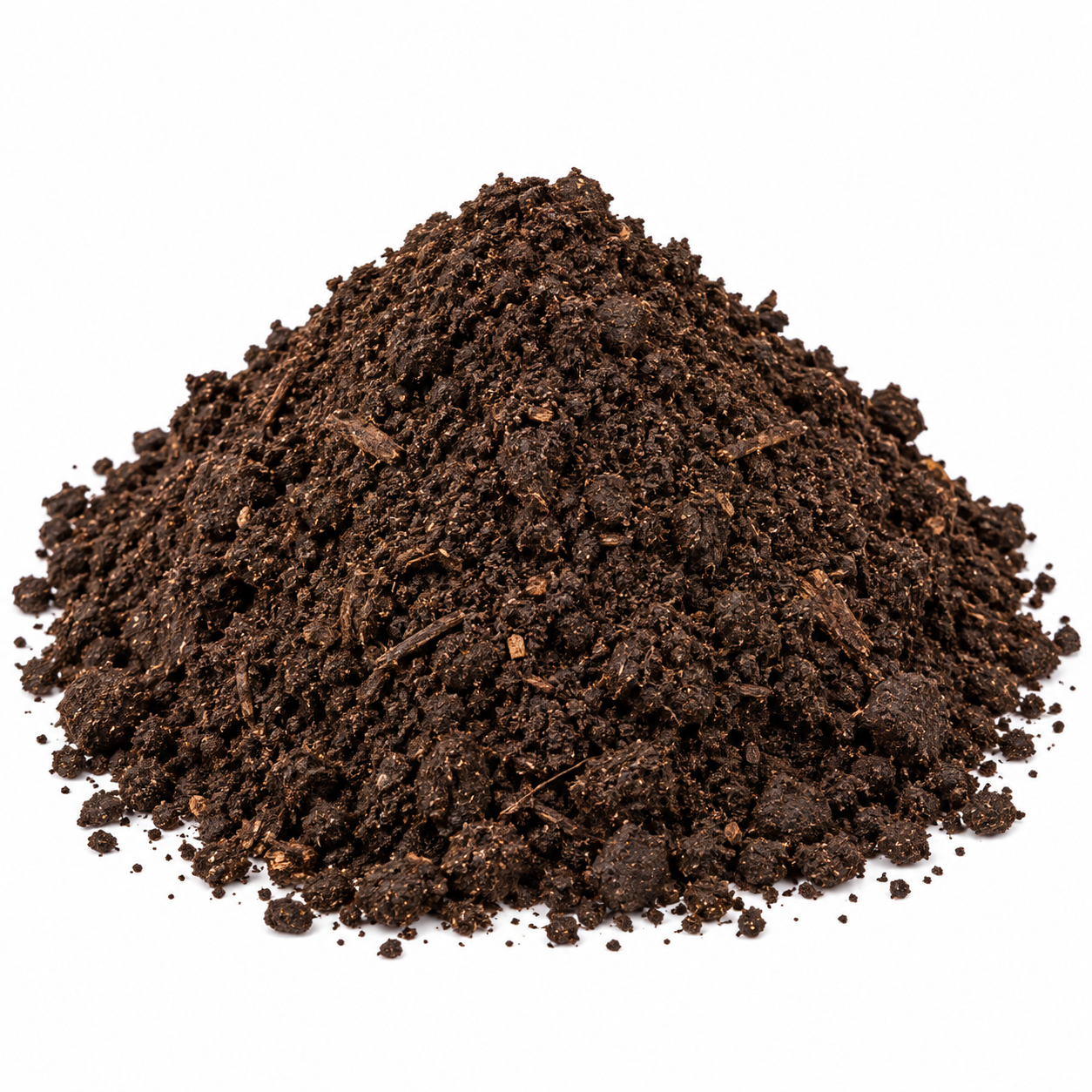
Topsoil is the upper layer of natural soil. It often contains minerals, organic matter, and living organisms. Its quality varies by source and location.
Garden soil is usually a prepared product intended for garden use. It may contain topsoil, compost, or other ingredients. The exact mixture depends on the product.
Dirt is a general everyday term. It does not describe a specific soil quality. Dirt sold for filling or grading may not be suitable for growing plants.
A soil calculator can help estimate the volume of material for a project, but it cannot tell you whether a particular soil product is suitable for your plants.
A dirt calculator may use the same length, width, and depth formula. The difference is the material being measured, not the basic volume calculation.
If you are buying soil for vegetables, flowers, or a lawn, check the product description. Ask the supplier about its composition and intended use.
Tips for Getting an Accurate Topsoil Estimate
A good estimate starts with careful measurements. These practical tips can help you avoid ordering too much or too little soil.
Measure the Area More Than Once
Check your length and width measurements before entering them. A small measurement error can change the final volume, especially on a large project.
Use the Correct Units
Measure length and width in feet if the calculator asks for feet. Enter the depth in inches if that is the selected unit.
Do not mix inches and feet without converting them first.
Measure the Actual Area
Do not include sidewalks, patios, driveways, or other spaces that do not need soil.
For an irregular yard, divide the space into smaller sections and calculate each one.
Check the Existing Ground Level
A flat area needs a different amount of soil than an area with deep low spots. Walk over the site and identify places that need extra filling.
Choose a Realistic Depth
Do not choose a depth just because it gives a convenient number. Think about the purpose of the project and the needs of the plants.
Confirm the Supplier’s Measurement
Ask whether the supplier sells topsoil by the cubic yard, cubic foot, or another unit. Also ask how the delivered quantity is measured.
Check the Soil Before Ordering
Not all topsoil has the same quality or texture. Ask whether the product is screened and whether it contains compost or other amendments.
These steps help you use a topsoil calculator more effectively and make a better purchasing decision.
Common Mistakes When Calculating Topsoil
Even a simple soil calculation can go wrong if you use the wrong measurements. Avoid these common mistakes.
Forgetting to Convert Inches to Feet
This is one of the most common errors. If your area is measured in feet and the depth is measured in inches, convert the depth before calculating cubic feet.
For example, 4 inches is one-third of a foot. It is not 4 feet.
Confusing Square Feet with Cubic Feet
Square feet measure area. Cubic feet measure volume.
Length multiplied by width gives square feet. Area multiplied by depth gives cubic feet.
A topsoil calculator uses both types of measurement, so it is important to understand the difference.
Ordering Soil Based on Area Alone
Knowing that your lawn covers 1,000 square feet is not enough. You also need to know the depth of the layer you want to add.
A 1-inch layer requires much less soil than a 6-inch layer over the same area.
Ignoring Uneven Ground
A calculated amount assumes the measurements represent the space you want to fill. If the surface has holes or low spots, the actual requirement may be higher.
Using the Wrong Soil Product
The volume calculation does not tell you whether the product is suitable for your project. Check the soil type before buying it.
Forgetting Delivery Access
Bulk topsoil may arrive in a truck. Make sure the delivery location is accessible and that there is enough space to unload the soil.
A correct volume estimate is only one part of a successful project. Planning the product, delivery, and spreading process also matters.
Topsoil calculator (FAQs)
1. How do I calculate how much topsoil I need?
Measure the length and width of the area in feet. Multiply them to find the area in square feet. Then multiply the area by the depth in inches and divide by 12 to find cubic feet.
Finally, divide cubic feet by 27 to convert the result into cubic yards.
You can enter the same measurements into a topsoil calculator to get the result automatically.
2. How much topsoil do I need for 1,000 square feet?
The amount depends on the depth.
For 1,000 square feet:
- At 1 inch deep: about 3.09 cubic yards.
- At 2 inches deep: about 6.17 cubic yards.
- At 3 inches deep: about 9.26 cubic yards.
- At 4 inches deep: about 12.35 cubic yards.
These amounts are mathematical estimates. Add an allowance only if your ground conditions require it.
3. How much topsoil do I need for a 10 × 10 garden?
A 10 × 10 foot garden has an area of 100 square feet.
At a depth of 4 inches, it needs about 33.33 cubic feet, or 1.23 cubic yards of topsoil.
The required amount will change if you choose a different depth.
4. How much topsoil does one cubic yard cover?
One cubic yard contains 27 cubic feet. The area it covers depends on the depth of the layer.
At 1 inch deep, one cubic yard covers approximately 324 square feet.
At 2 inches deep, it covers approximately 162 square feet.
At 3 inches deep, it covers approximately 108 square feet.
At 4 inches deep, it covers approximately 81 square feet.
These figures assume an even layer and no material loss.
5. How many cubic feet are in one cubic yard?
One cubic yard contains 27 cubic feet.
To convert cubic yards into cubic feet, multiply by 27. To convert cubic feet into cubic yards, divide by 27.
6. Can I use a topsoil calculator for a circular area?
Yes. First, calculate the circular area using the formula:
Area = 3.14 × Radius × Radius
Then multiply the area by the topsoil depth in feet to find cubic feet. Divide the result by 27 to get cubic yards.
7. Can I use the topsoil calculator for an irregular area?
Yes. Divide the space into smaller shapes, such as rectangles and circles. Calculate the area of each shape, add the areas together, and multiply by the selected depth.
This method is useful for curved garden borders and L-shaped lawns.
8. Is topsoil depth measured in inches or feet?
Both units can be used. Many homeowners find inches easier when choosing a layer depth. Soil volume calculations often use feet.
If your measurements use different units, convert them before multiplying.
9. Is a topsoil calculator accurate?
A topsoil calculator can provide an accurate mathematical estimate when you enter correct measurements. However, the actual amount may vary because of uneven ground, settling, soil condition, and measurement errors.
For this reason, treat the result as a planning estimate rather than a guarantee of the exact amount delivered.
10. What is the difference between cubic feet and cubic yards?
Both units measure volume.
A cubic foot is a smaller unit. A cubic yard is equal to 27 cubic feet.
Cubic yards are commonly used for bulk landscaping materials in the United States. Cubic feet are often used for smaller quantities and packaged products.
11. Can I calculate topsoil using square footage?
Yes. Start with the total square footage of the area. Multiply it by the depth in inches and divide by 12 to get cubic feet.
Then divide by 27 to get cubic yards.
This is the standard method for calculating topsoil volume for a flat rectangular area.
12. Should I add extra topsoil to my estimate?
You may need extra material if the ground is uneven or contains low spots. A small allowance can help with planning, but it depends on the project.
Do not add a large amount without checking the finished height and drainage requirements.
13. Can I use this calculator for landscaping?
Yes. You can use the topsoil calculator for lawns, flower beds, vegetable gardens, planting areas, and many other landscaping projects.
Make sure you measure only the areas where you plan to add soil.
14. Does the calculator tell me which topsoil to buy?
No. The topsoil calculator estimates volume. It does not test soil quality or recommend a specific product.
Choose soil based on your project and the needs of your plants. Ask your local supplier about the soil composition before ordering.
15. Why do suppliers sell topsoil by cubic yards?
Cubic yards are a convenient unit for measuring and delivering large amounts of loose material. A truck can deliver several cubic yards in one load.
Knowing your required volume helps you compare supplier quotes and plan delivery.
Calculate Your Topsoil Needs Before You Order
Estimating soil does not have to be difficult. Measure your project, choose a suitable depth, and calculate the volume in cubic feet or cubic yards.
Our topsoil calculator helps you do this quickly. It can help with a small garden bed, a large lawn, or a wider landscaping project. You can change the measurements and depth to compare different plans before buying soil.
For the best estimate, measure carefully and use the actual area you want to cover. Check the soil product with your supplier and consider the condition of your ground before placing an order.
Use the topsoil calculator above to find the amount of soil your project needs and start planning with confidence.